




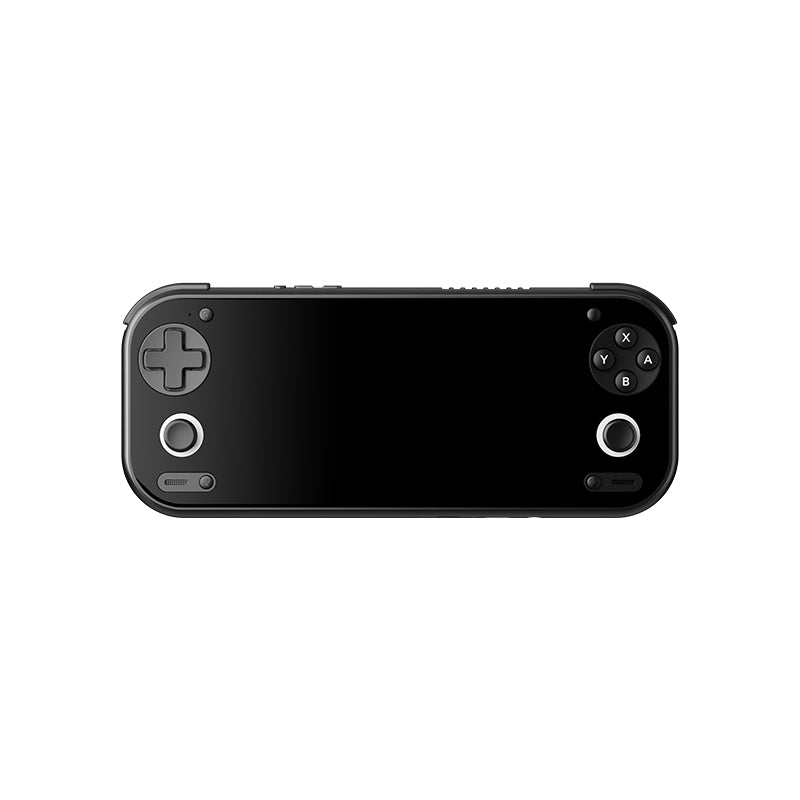
Anbernic Launches the RG 55G1, Its First Snapdragon Handheld, at $139
Anbernic opened orders for the RG 55G1 on August 31, 2026, two months after revealing its spec sheet. The Chinese manufacturer makes no secret of the reference: horizontal layout, centred screen, colourful shells, the machine instantly evokes Nintendo's Switch Lite. The comparison stops at the design, though, because the internals belong to a different class than the brand's usual entry-level handhelds.
The RG 55G1 is Anbernic's first console built around a Qualcomm chip. The 4 nm Snapdragon G1 Gen 2, paired with an Adreno A12 GPU, replaces the Rockchip and Unisoc SoCs the manufacturer had favoured until now. It drives a 5.5-inch Incell IPS panel at 1920 x 1080 protected by 2.5D glass, all running Android 14 with Wi-Fi 5, Bluetooth 5.0, active cooling, a 3.5 mm jack and a microSD reader. The sticks and triggers use Hall effect sensors, the latter with RGB backlighting.
The 6000 mAh battery is the machine's other selling point, with a claimed runtime of around eight hours, a comfortable figure for a handheld this size. On pricing, the 4 GB memory and 64 GB storage configuration is listed at $149.99, cut to $139.99 by a launch discount, while the 8 GB and 128 GB version climbs to $174.99. Bundles shipping with a 128 or 256 GB microSD card push the total to $224.99. Three colourways are offered: black, retro grey and indigo. On paper, the Qualcomm chip should reach PlayStation 2 and Wii emulation, a step above what previous models targeted.
The console can be ordered from Anbernic's official product page, which lists every available configuration. For newcomers to Android emulation, the RetroArch Android installation guide covers setup, adding cores and configuring controllers, step by step.
Source: Time Extension