




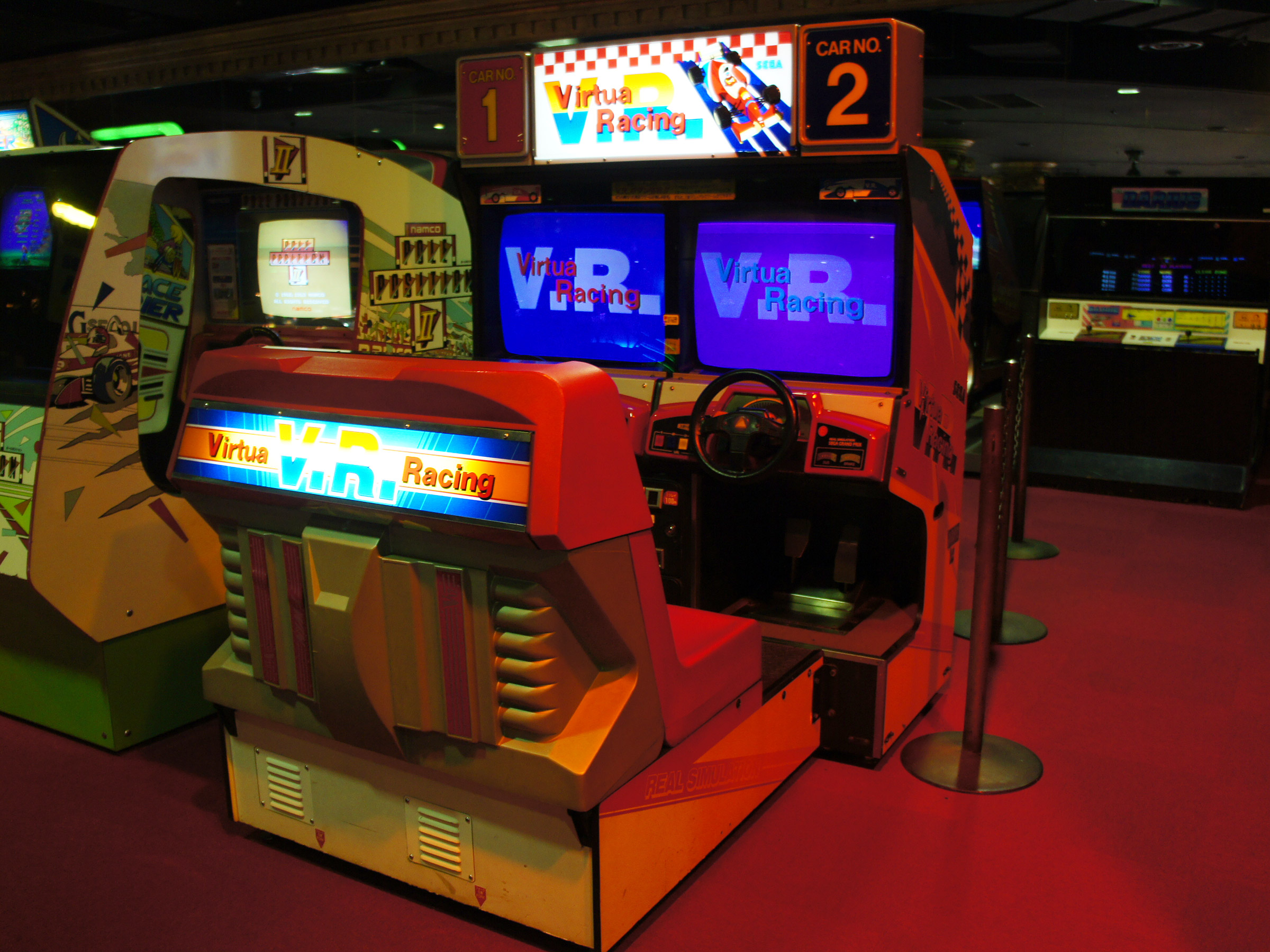
New FPGA Core Runs Virtua Racing With Unprecedented Precision
Sega's Model 1, the arcade board that debuted in 1992 and powered games like Virtua Racing and Virtua Fighter, has long been one of the least faithfully preserved major arcade architectures: its unusual, partly experimental design has discouraged accurate recreation, and MAME itself still hasn't finished emulating it. Developer Alphanu1 has just changed that with a new core for the MiSTer FPGA platform, running Virtua Racing, the Model 1's very first game, at 99% of its original hardware speed.
Hardware reconstruction, not software simulation
Unlike a conventional emulator that simulates hardware behavior through calculation, an FPGA core like this one directly reproduces the Model 1's circuitry at the silicon level. The result is striking: the game boots, plays its intro sequence and runs from start to finish, handling the title's signature mix of 2D layers and 3D polygons at once, with only occasional tearing and minor glitching. One notable current limitation: Virtua Racing's audio, which originally ran on a separate board, isn't reproduced yet in this version of the core.
Alphanu1 has said there are no current plans to tackle the Model 1's other games, namely Virtua Fighter (1992), Virtua Formula (1993), Star Wars Arcade (1994), Wing War (1994) or Virtuality NetMerc (1995). Even so, the project marks a major step forward for the preservation of 1990s arcade hardware that nobody had managed to recreate with this level of accuracy before.
Source: Time Extension